Barefoot shoes as an investment in health? Physiotherapist PhDr. František Takáč (Ceremina) explains how to transition to barefoot shoes, strengthen your feet without exercise, and for whom Angles shoes are the best choice.
Imagine that every walk you take, every step you make, is simultaneously a natural and unconscious gym for your body. Sounds like a utopia? Thanks to barefoot shoes, this idea is becoming a reality for more and more people. At Angles, we have barefoot shoes that respect the natural anatomy of the foot. Our feet, often trapped in narrow and cushioned shoes, gradually lose their natural function and sensitivity. Barefoot shoes are a return to nature, allowing the foot to feel, react, and work.
But what does science and the practice of experts who deal with musculoskeletal issues daily say about this trend? We turned to PhDr. František Takáč, a physiotherapist from the Ceremina rehabilitation center, to clarify the real impact of wearing barefoot shoes. His perspective provides valuable advice, confirms the deep value of this approach, and defines it as a strategic step toward a healthier future.
Barefoot is a clear investment in musculoskeletal health
In the fast-paced world we live in, we spend a lot of time and money on beauty, relaxation, entertainment, and various other pleasures. But we often forget the basics – our musculoskeletal system, which we usually only demand from, without adequate support. Therefore, it's logical to ask how we can support our musculoskeletal system so that it serves us as long as possible and without pain.
The answer is clear for PhDr. Takáč. When asked if barefoot shoes can be viewed as an investment in musculoskeletal health, he responds firmly: "Definitely yes."
For those still considering this change, he also offers clear advice based on his years of experience with patients: "If someone is considering transitioning to barefoot shoes, whether for preventive reasons or because they have musculoskeletal pain, I definitely recommend it. Based on my patients' experiences, I can say that it's the right choice to do something for your musculoskeletal health and comfort."
Immediate benefits for those who spend the day on their feet
The investment in barefoot shoes is not just long-term. It also brings immediate and noticeable benefits, especially for a specific group – people who spend most of the day standing (salespeople, healthcare workers, manufacturing workers, etc.). Conventional shoes may worsen the situation, while barefoot shoes support the natural function of the foot, leading to a chain reaction of positive changes throughout the body.
What benefits can they expect? The physiotherapist lists: "Reduction in muscle tension not only in the feet, relief from back or joint pain, a light feeling in the ankles, prevention of deformities like hallux valgus, prolonged overall physical performance, and many other individual benefits." Barefoot shoes actively prevent problems while improving comfort. More information on why it's worth choosing this path can also be found in our guide: Why choose barefoot shoes, how to choose and wear them?
From convention to freedom
The transition from regular shoes to barefoot shoes is a process that requires patience and a reasonable approach. Our feet, after years of getting used to firm support, cushioning, and raised heels, must wake up and learn to function naturally again. The physiotherapist confirms that although most clients transition smoothly, it's important to realize that the foot works differently, and this change may manifest itself.
So how should one proceed if they want to switch to barefoot shoes without the risk of overloading? The key is gradual progression. PhDr. František Takáč has specific tips in this regard: "To avoid overload, it is recommended to start by wearing them for 20 minutes a day and gradually increase the time. Accompanying exercises for the foot are a plus, and the surface should not be too hard at first. Initially, alternating with regular shoes can also be helpful." This approach is crucial for re-educating walking and gradually strengthening the muscles. If you're looking for instructions on accompanying exercises to speed up the change, we recommend our article: Keep your feet in shape: simple exercises to help you.
How the body can react
The change in load will show up where it's most needed. During the first weeks, you can expect changes in perception and muscle engagement. "It may feel subjective in the ankle area, sometimes even in the whole legs, as if the feet have just finished exercise," explains the physiotherapist.
This feeling is natural since other muscles in the calves and Achilles tendon are getting involved. This happens because barefoot shoes have zero drop – the heel is at the same level as the toes – with no height difference. While regular shoes shorten the calf muscles, barefoot shoes force them to their full, physiological length. "Sometimes clients report feeling as if they have started perceiving the arch of the foot. Occasionally, the change in load can briefly manifest in the hips, lower back, or knees. However, all these changes are a sign that the muscles are adjusting the body into a different position than before." The body is actively adjusting to a healthier and more natural posture.
Barefoot as an unconscious gym and a benefit for rehabilitation
One of the biggest myths is the idea that strengthening the feet requires active exercise. Barefoot shoes overcome this notion by constantly stimulating the foot to work. PhDr. Takáč agrees: "Can we say that barefoot shoes strengthen the feet even without active exercise? Definitely yes, but this shouldn't be interpreted as equal to, say, strength training."
It's more about strengthening the muscles through their physiological use. Since the foot is not fixed and constantly reacts to the surface, it engages muscles in the correct balance, preventing muscle imbalances, which are a common cause of pain in the entire musculoskeletal system. The physiotherapist explains this with an example: "Barefoot shoes prevent these imbalances because they stimulate us to use the body physiologically." It's like having a constant, functional workout.
Barefoot and the potential for injuries
And what about rehabilitation after lower limb injuries? Barefoot shoes can't be called classic rehabilitation; they are more of a permanent change in movement load, which has the potential to complement the healing process. "A lot depends on the diagnosis. If we are talking about injuries caused by proprioceptive deficits, poor foot function, etc., barefoot shoes certainly represent an entry point into this area," says PhDr. Takáč. Improvement in proprioception (the ability to sense body position) leads to better joint stability and muscle control. This aspect is important, for example, in correcting bunions. You can read more about it in the article: Hallux valgus? Barefoot shoes may help.
Barefoot for children and caution in specific groups
The question of shoe selection is especially important in childhood when the foot is still developing. In this case, PhDr. František Takáč is definitely in favor. "I certainly recommend these shoes for children, as healthy foot development depends on physiological sensations and proprioception. It is widely known that children's feet develop properly when barefoot." Since modern interiors (floating floors, tiles) lack stimulation for the foot, barefoot shoes provide a suitable alternative, offering the necessary sensory feedback. Caution is only necessary for children whose feet are extremely collapsed inward – in this case, corrective footwear may be temporarily needed, which can later be combined with barefoot shoes.
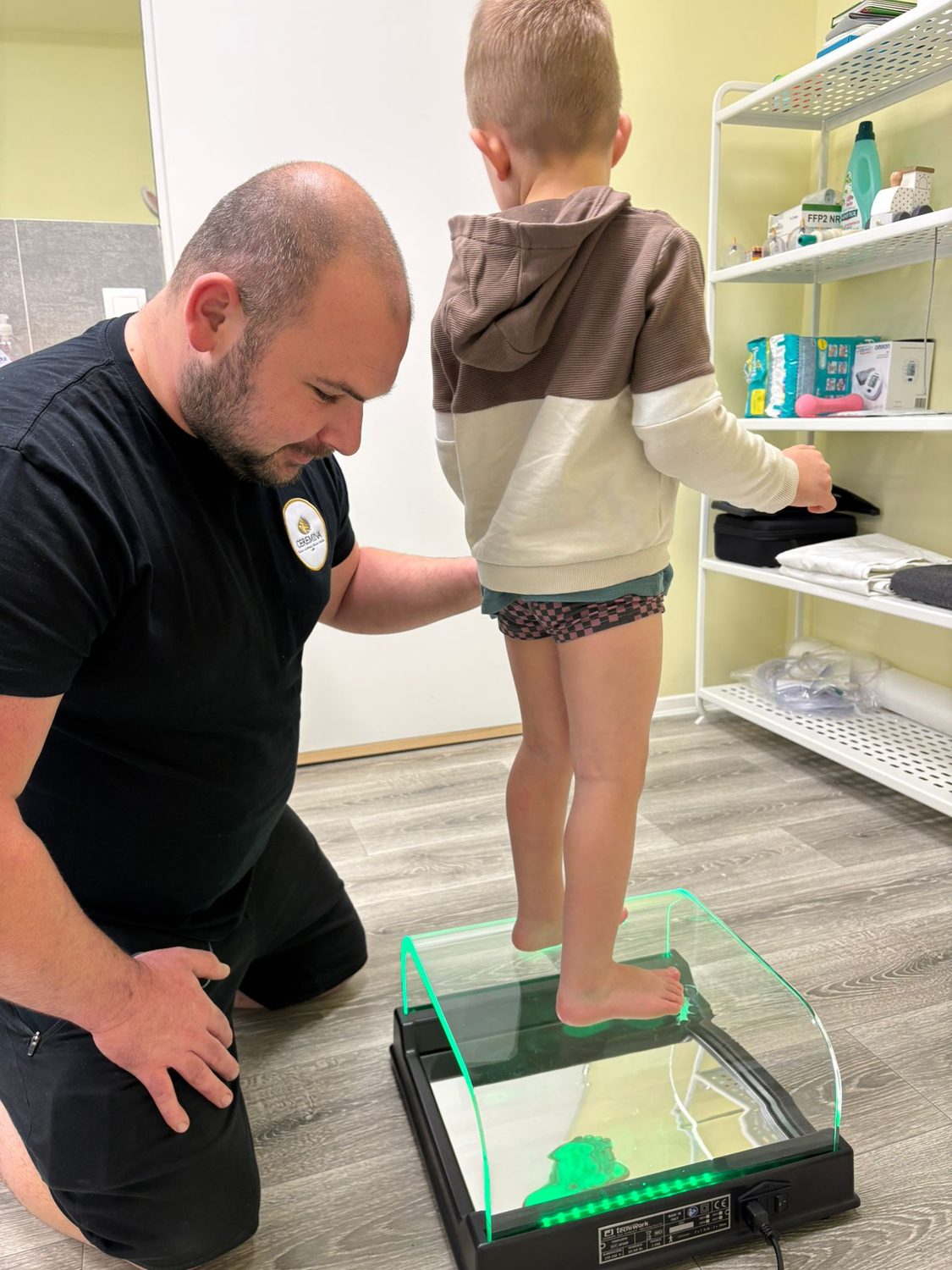
Source: Ceremina.sk
Who should be cautious?
Although barefoot shoes are suitable for the vast majority of the population, the rule applies: "Nothing is for everyone." The physiotherapist warns of a small group who should consider wearing barefoot shoes. "Although the unsuitable candidates for barefoot shoes represent only a small group, it's good to know about them to avoid unnecessary problems."
Specifically, he recommends considering this footwear for: "Very elderly people, where walking fixation is so strong that the space for re-education is almost non-existent, and additionally, impaired vascular and nerve supply already presents a risk of damage." Similarly, diabetics with severe polyneuropathy should be cautious. Patients with neurological or severe orthopedic diagnoses should always consult with a specialist before wearing them.
A decision for healthier movement
Barefoot shoes from Angles are not just a fashion trend; they are a logical and functional decision for health. PhDr. František Takáč's view confirms that these shoes have the potential to ensure long-term mobility, functionality, and overall comfort of the musculoskeletal system. It's active support for your body in everyday life that pays off. So why hesitate? Take the first step toward healthier, freer, and more natural walking today.
 Czech barefoot brand
 Return within 14 days
 € - EN
 Čeština
 Deutsch (DE)
 Deutsch (AT)
 Slovenčina
 Magyar
 български
 Nederlands
 Français
 Hrvatski
 Italiano
 Italiano
 Polski
 Română
 Slovenščina


