To ensure our feet carry us safely and painlessly for many years, we need to take regular care of them. Try simple exercises for your feet and arch that will help.
We usually take great care of our shoes because we want them to last a long time. However, we should also regularly take care of our feet, which carry us all day long. Only then will they stay fit into old age and not cause us pain.
The Foot as a Sensory Organ
Our feet bear our body all day and are the basis for our overall posture. Their structure is quite complex and includes not only countless bones and joints but also muscles and ligaments that provide us with support and stability daily.
They assist us in walking, running, and climbing, or help us maintain balance when we are just standing. However, feet also count as a sensory organ. Through them, the brain receives information about body positioning or the terrain we are currently moving on.
Allow Your Feet Freedom of Movement
Unfortunately, it is true that the modern, mostly sedentary lifestyle does not contribute positively to the health of our feet. The fact that we mostly keep our feet confined in narrow shoes with soles that restrict their natural movement certainly doesn't help.
Feet are not weaklings who need support in the form of tight, firm shoes that also constrict them at the ankles. Quite the opposite. They just need to be slightly awakened. Therefore, allow them at least a short time of barefoot walking (e.g., in the summer on a meadow) and don't forget to regularly strengthen and stretch them.
Why Exercise Feet When Switching to Barefoot
As mentioned earlier, conventional shoes restrict the feet. This is also why the foot often becomes weak and needs a bit of exercise to wake up from its long sleep and achieve proper condition. In practice, it usually means that when you buy your first barefoots, wearing them is initially a bit of a shock. The foot suddenly feels all the stimuli that were previously foreign to it.
However, if you give it some time, it will gain the necessary stability and strength to maintain the arch and the flexibility to correctly respond to the terrain. It is absolutely fundamental to move the entire foot and activate all muscles, tendons, and joints.
How to Move and Strengthen Ankles
Only if the foot has sufficient mobility in the ankle, can it step correctly. Simple exercises that will help you with this include rotating the feet at the ankle, tilting the foot in all directions to the maximum range, and the classic "heel-to-toe" movement that you surely know from school gym classes.
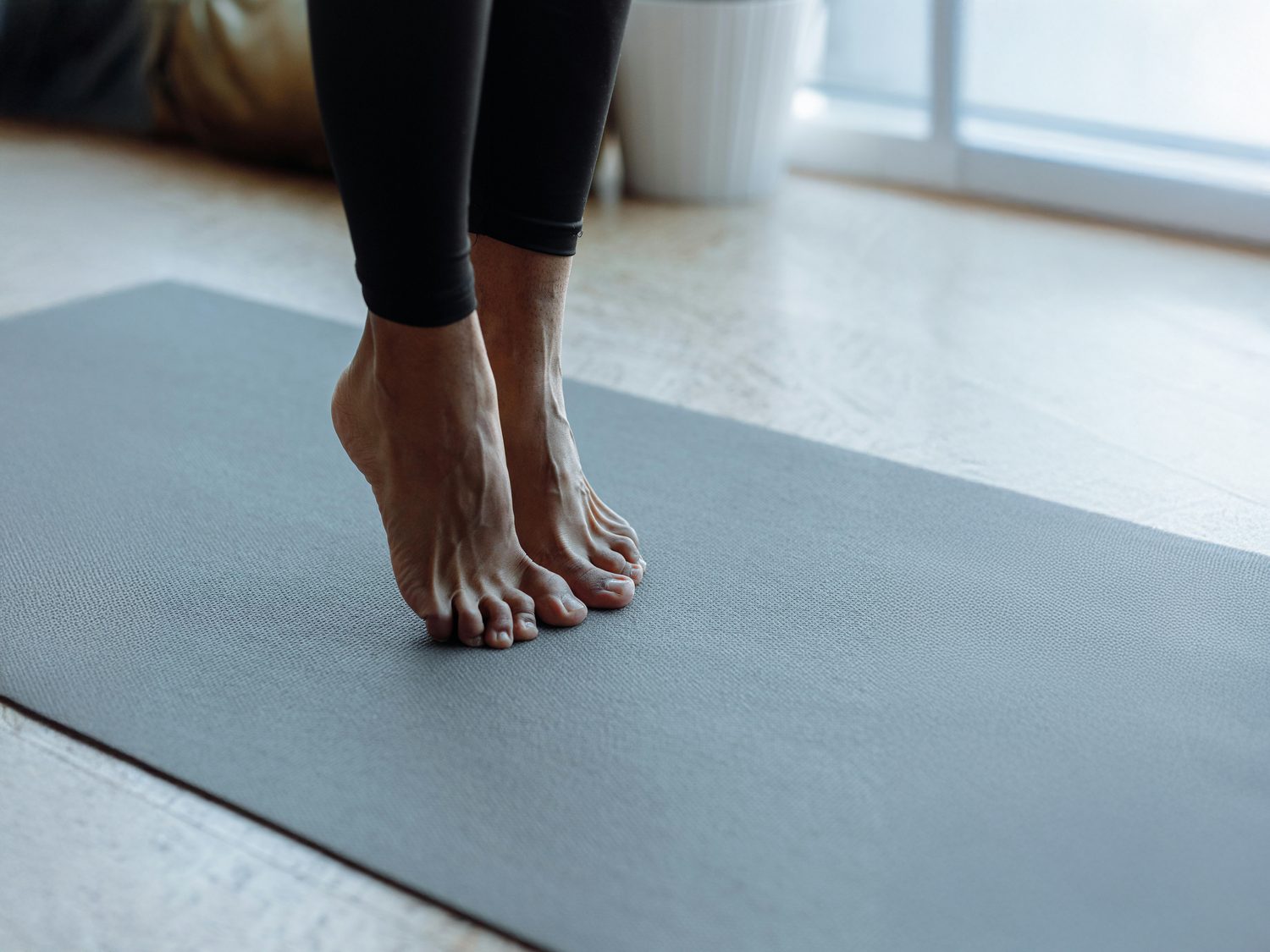
Also very effective is alternating between ballet plié and relevé, though it's a bit more challenging to maintain balance. It involves standing on the ground on your full feet, bending your knees, and lifting your heels off the ground (thus you are standing on your toes with bent knees). Then you straighten your knees, remain in the rise for a moment, and finally return to the starting position.
How to Relax and Strengthen Toes
The first, very simple exercise to relax and strengthen the toes goes as follows. Spread your toes as far apart as possible and then pull them together as tightly as possible.
You can also clench your toes into a fist shape, making sure the toes do not overlap but are neatly arranged side by side.
A slightly more difficult exercise, which requires patience, is lifting just the big toe. Place your foot flat on the ground and then lift the big toe as high as possible several times. The other toes must remain on the pad.
If you can't manage it yet, don't be discouraged – you can try gradually lifting all the toes from the big toe to the little toe and then placing them back down, this time from the little toe to the big toe.
Overall Foot Exercise
Once your ankles and toes are mobilized and relaxed, you can start strengthening the foot as a whole.
Sit on the ground, bring your feet together, and connect all your toes. This simple exercise will strengthen your foot arch.
Then you can try shifting weight. Again, a very simple, quick exercise that strengthens the feet overall and also firms the ankles. Simply stand and alternately shift your weight onto the heels... and onto the toes... and remain in that position for a moment.
Finally, a challenge: sit on a chair and place a sheet of paper under your feet. Grab a pencil with your toes and try to draw circles on the paper. You will see that if you consistently strengthen your feet, the final drawing will look better and better.
Invite a Ball for Help
A very pleasant way to make foot exercises more enjoyable is to use a massage ball (or massage mat). It helps increase muscle flexibility, improves their overall movement, and promotes proper blood circulation in the foot.
It is ideal to start with a softer one (e.g., foam) and gradually move to, say, a golf ball. First, you can place it under your toes and press on it for a while, then move it under the middle of your foot, and finally under your heel. This exercise has the advantage of activating not only the entire sole of the foot but also the heel and transverse arch. Unengaged foot muscles can also be exercised using sensorimotor tools.
Stimulating insoles for shoes designed for all-day wear help promote leg blood circulation and stimulate peripheral nerves. Toe separators help restore the natural shape of the foot and improve balance, stability, gait, and posture. They are also suitable for all-day wear. And the massage ball Neuro Ball helps relax stiff parts of the feet after a long day on your feet.
How to Utilize Training in the Gym
Strength training is a discipline where the work of the feet is very important. It would therefore be a shame to imprison the feet in tight shoes. In this exercise, you should feel the arch, evenly distribute the weight between the heel, the joint under the big toe, and the joint under the little toe (so-called three-point support), and at the same time keep the feet overall active. Therefore, either barefoots or the completely barefoot are very useful here. The three-point support can be excellently trained in virtually any exercise where you stand on your feet – whether it be squats, various up and downs on a platform, reverse lunges, or even deadlifts.

Try to Harden Your Feet
Much has been written about the benefits of hardening. However, alternating between hot and cold showers not only provides benefits for the entire organism but specifically for the feet as well. It positively affects both nerve activity and capillary blood circulation. It is recommended to shower the feet at least once a day from the knees down (feel free to go higher if you dare). First, rinse them with warm water for 15-20 seconds and then with cold water for 15-20 seconds. Repeat this process 3-7 times, always ending with cold water.
Patience Pays Off
As with any other exercise, diligent work brings deserved fruit here too. So if you are just starting to strengthen your feet, do not be discouraged by the fact that it does not go as you imagined right away. The muscles in the legs simply need time to activate. If you give them time, you can soon rejoice at your first successes.
 Czech barefoot brand
 Return within 14 days
 € - EN
 Čeština
 Deutsch (DE)
 Deutsch (AT)
 Slovenčina
 Magyar
 български
 Nederlands
 Français
 Hrvatski
 Italiano
 Italiano
 Polski
 Română
 Slovenščina


