Barefoot shoes are more than just a trend – they are shoes that support natural foot movement and healthy posture. If you invest in them, you definitely want them to last as long as possible and not lose their properties or appearance. Regular care is therefore key to keeping your shoes comfortable, durable, and aesthetically appealing.
In the following guide, you will find detailed advice on how to care for barefoot shoes according to the type of material, how to prevent damage, how to properly clean, dry, and store shoes, and even how to deal with odor problems.
Why is it important to take care of barefoot shoes?
Unlike traditional shoes, barefoot shoes are made of more flexible, often thinner materials and have a specific design – zero drop, thin soles, and flexible uppers. This makes them comfortable, but also more sensitive to improper handling.
If we don't take care of barefoot shoes:
- their lifespan is shortened,
- the materials can crack, dry out, or deform,
- the sole can lose its grip,
- and last but not least, an unpleasant odor can develop in the shoe.
On the contrary, proper care can extend their lifespan by several years. The investment in waterproofing, creams, or cleaning products is small compared to the cost of a new pair of quality barefoot shoes.
General care guidelines
1. Properly putting on and taking off shoes
Many people do not realize that shoe wear does not begin only when walking, but already when putting them on. If you forcefully "pull" on your shoes without untying the laces or using a shoehorn, the heel is damaged and over time the entire upper may become deformed. The correct way is:
- always untie your shoes,
- use a shoehorn,
- take them off with your hands, not by stepping on the heel.
2. Impregnation
Impregnation is a basic step that protects shoes from moisture, salt, grease, and dirt.
- When to waterproof? Before first use, and then regularly – ideally once a month. More often during the winter months.
- How to waterproof? Spray the waterproofing spray onto clean, dry shoes from a distance of about 20 cm. Don't skimp, but don't overdo it either – it's better to apply a thin layer regularly.
- Types of impregnation: Wax or cream impregnation products are suitable for smooth leather, special sprays for nubuck and suede, and universal protective agents for textiles.
3. Regular cleaning
The biggest mistake is to let mud or salt dry. The longer dirt stays on the material, the deeper it penetrates and deteriorates its properties.
- After each wear, we recommend at least cleaning your shoes with a brush or damp cloth.
- Once in a while, treat them to a deep clean – depending on the material, as we will discuss below.
4. Drying
Never place wet shoes on a radiator or in direct sunlight – the leather could crack, the fabric could lose its elasticity, and the sole could come off.
- It is best to let them dry freely at room temperature.
- To speed up drying, you can use newspaper or special shoe trees, which will also help maintain the shape of the shoes.
- If you have removable insoles, take them out and let them dry separately.
5. Storage
When you are not wearing your barefoot shoes, they should be stored in a dry, cool, and ventilated place.
- Never leave them closed in a plastic bag – the material would become damp and odors or mold could develop.
- It is best to store them in a shoe rack or in a breathable fabric bag.
- Always clean and waterproof them thoroughly before storing.
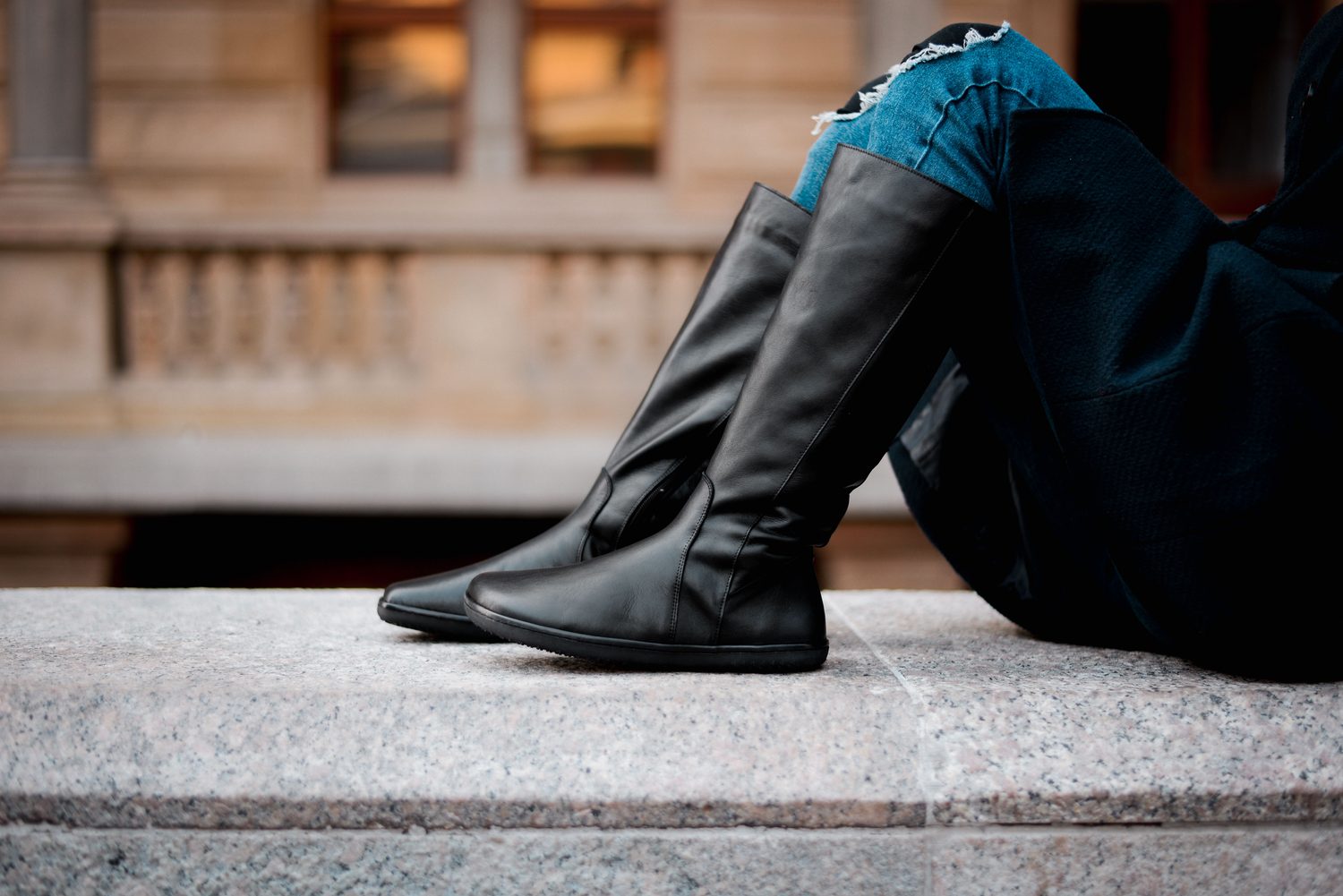
Care according to material
Each material requires specific care. Incorrect procedures can damage shoes, so it is worth knowing what to use on which surface.
Smooth leather
Leather is a durable and elegant material, but it dries out naturally. Therefore, it needs regular nourishment.
- Use special creams or waxes for shoes. Apply a thin layer and leave it on, ideally overnight.
- After drying, polish the shoes with a soft brush.
- Apply the cream to the seams as well – this is where the leather is most stressed.
- Caution: oils and unsuitable lubricants can damage or darken the leather.
Brushed leather (nubuck, suede, velour)
These materials are more sensitive and require special products.
- Use a soft brush or special eraser for cleaning.
- Impregnate only with a spray designed for brushed leather.
- Never use creams – they would destroy the typical velvety surface.
Textile
Textile barefoot shoes are light and comfortable, but they collect dust and dirt.
- Clean them with a soft brush or sponge and soapy water.
- For heavier soiling, you can use a mixture of baking soda and hydrogen peroxide.
- Remove the insoles and wash them in warm soapy water, then dry them thoroughly.
- Impregnate them frequently to reduce dirt accumulation.
Synthetics
Synthetic materials are more resistant to moisture, but still need basic care.
- Clean with a damp cloth and soap.
- Use a waterproofing agent designed for synthetic shoes.
Cork
Most commonly found on sandals or slippers.
- Use a special cream and a soft cloth for cleaning.
- You can use a toothbrush for stubborn stains.
How to prevent odors
Barefoot shoes are often worn barefoot or with thin socks, so it is important to pay attention to hygiene.
Tips for keeping your shoes fresh:
- Wear clean socks, ideally made of natural materials.
- Allow your shoes to air out after each wear.
- Wash or replace removable insoles regularly.
- Use baking soda, activated charcoal bags, or special deodorant sprays to neutralize odors.
What to avoid
-
Washing in the washing machine – water, high speeds, and detergents will damage the structure of the shoe.
-
Direct heat – radiators, dryers, and sunlight can deform shoes.
-
Chemicals – solvents, gasoline, and aggressive cleaning agents will destroy the sole and upper.
-
Neglecting maintenance – dirt, salt, and moisture are the biggest enemies of shoes.
Quick steps after arriving home
-
Carefully take off your shoes and untie the laces.
-
Remove coarse dirt with a brush.
-
Leave them to dry at room temperature.
-
Remove the insoles and leave them to dry separately.
-
Once dry, waterproof them as needed.
-
Store in a dry, ventilated place.
Longer life for your barefoot shoes
Caring for barefoot shoes takes only a little time, but it can significantly extend their life. The key is regular cleaning, waterproofing, gentle drying, and proper storage. Each material has its own specifics, so it pays to know the right procedures.
If you take good care of your barefoot shoes, they will reward you with a long life, lasting comfort when walking, and a fresh appearance. And since barefoot shoes are not cheap, this care is also an investment in your wallet.
 Czech barefoot brand
 Return within 14 days
 € - EN
 Čeština
 Deutsch (DE)
 Deutsch (AT)
 Slovenčina
 Magyar
 български
 Nederlands
 Français
 Hrvatski
 Italiano
 Italiano
 Polski
 Română
 Slovenščina


