Heel spurs can significantly complicate your life. How do you know if you have a heel spur? One way to prevent its onset may be through wearing barefoot shoes.
Heel spurs, which often cause pain shooting up to the calf, do not occur randomly. This bony outgrowth on the heel bone is caused by pathological overloading of the soft tissues of the foot and calf. Overloading arises from poor movement patterns, hypermobility, or inappropriate footwear.
How to deal with a heel spur? Performing special exercises, wearing barefoot shoes, and using homeopathic remedies can help.
How to detect a heel spur
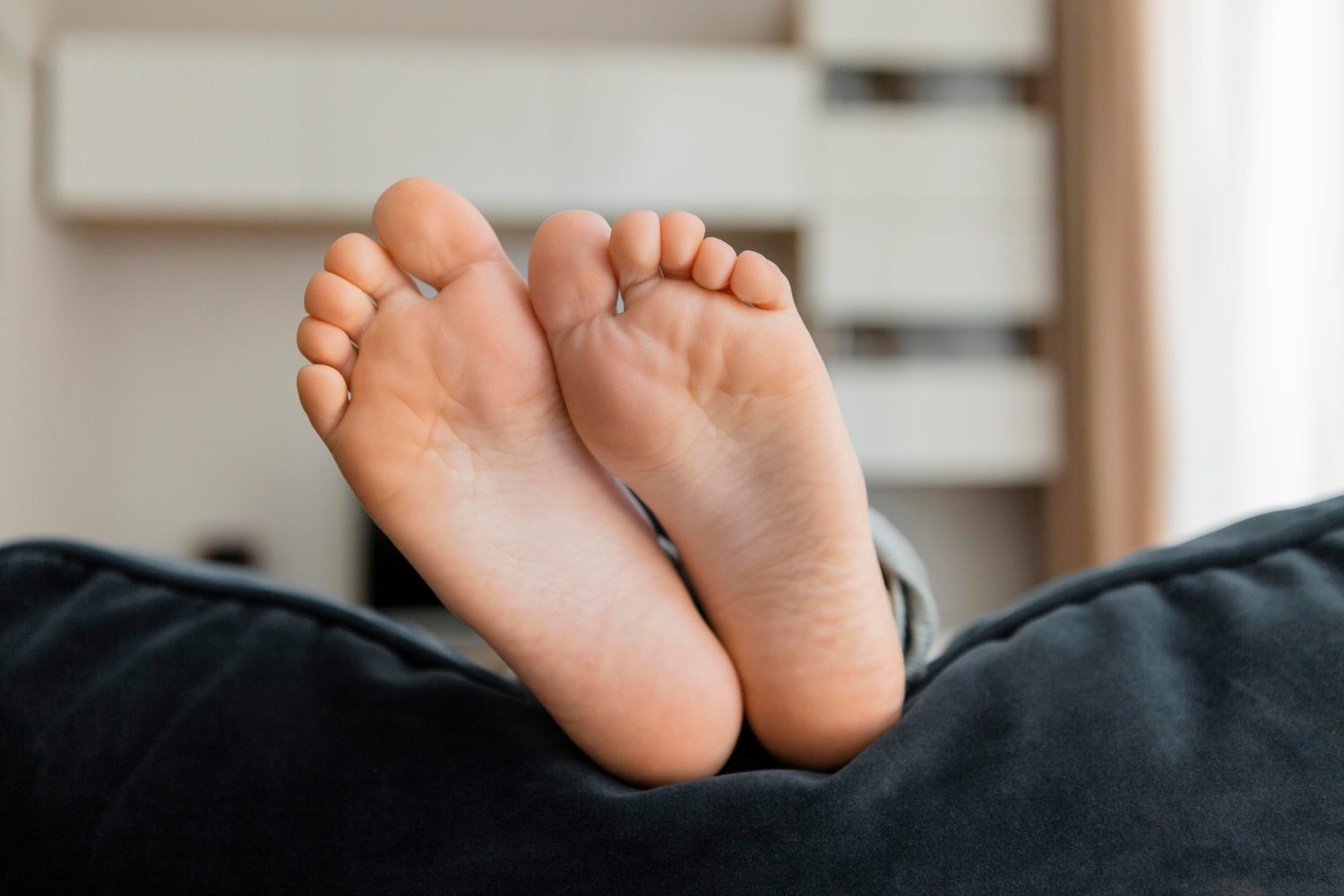
If you experience pain on the surface of the heel or its inner edge, appearing not only during walking or sports but often after waking up in the morning or even during sleep, it is likely that you have what is known as a heel spur. This bone outgrowth forms at the bottom part of the heel due to the overloading of soft tissues attached to the heel bone.
This then leads to tendon inflammation, which results in the deposition of calcium crystals and ends with the formation of a bone outgrowth. Several causes can be identified – prolonged foot strain (running on hard surfaces, standing for long periods), wearing inappropriate shoes (narrow toes, high heels), various foot deformities (e.g., functionally flat feet), or even improper body posture.
What the doctor will advise for a heel spur
If you suspect a heel spur, do not delay visiting a doctor. The sooner treatment begins, the sooner you will be free from the problem. A sports physician or orthopedist will first examine your foot to rule out the possibility of arthritis or osteoporosis. Nowadays, this is mostly done using ultrasound, which can reliably detect heel spurs.
Most commonly, besides rehabilitation or shockwave therapy, the doctor will prescribe ointments, pills, or injections containing corticosteroids, which immediately reduce pain and inflammation but can have many side effects.
An alternative to corticosteroids can be various creams and gels from the pharmacy containing non-steroidal anti-inflammatory drugs along with cooling gel cushions that reduce both inflammation and pain. It is recommended to purchase foam insoles or soft gel inserts for your shoes, which reduce the pressure exerted on the heel bone during walking.
Since the stressed tendons around the heel need sufficient nutrients for their regeneration, it is also good to focus on dietary supplements rich in proteins.
A physiotherapist can also relieve pain
Common procedures used in the treatment of heel spurs include laser therapy, therapeutic ultrasound, or magnetotherapy. Although these physical therapy methods have the advantage of being easily accessible within state health care facilities, they are often not very effective and do not address the cause.
However, a private physiotherapist goes further. They primarily focus on why the heel spur occurred in the first place and help you adopt the right habits to prevent the problem from recurring.
At the first visit, the physiotherapist will perform a comprehensive kinesiological analysis to determine why the heel spur occurred. Then, they will manually treat the soft tissues in the area of the foot and calf and explain how to perform exercises at home aimed at relaxing/straining tendons and muscles or acquiring the correct foot strike and roll-off during walking.
Part of the therapy also often includes shock waves, which relax all the muscles around the heel bone, and tapes are commonly used nowadays to help maintain proper muscle tension in the treated area.
Home exercises and massage can help
In the phase of acute inflammation, it is better to limit sports and give your body a chance to regenerate. It is recommended to stretch and relax the overstrained tendons and muscles in the foot and calf every day according to the physiotherapist's instructions, preferably right after waking up – for this, you can also use various balance aids, a foam ball, a spiked ball, or adjustable socks.
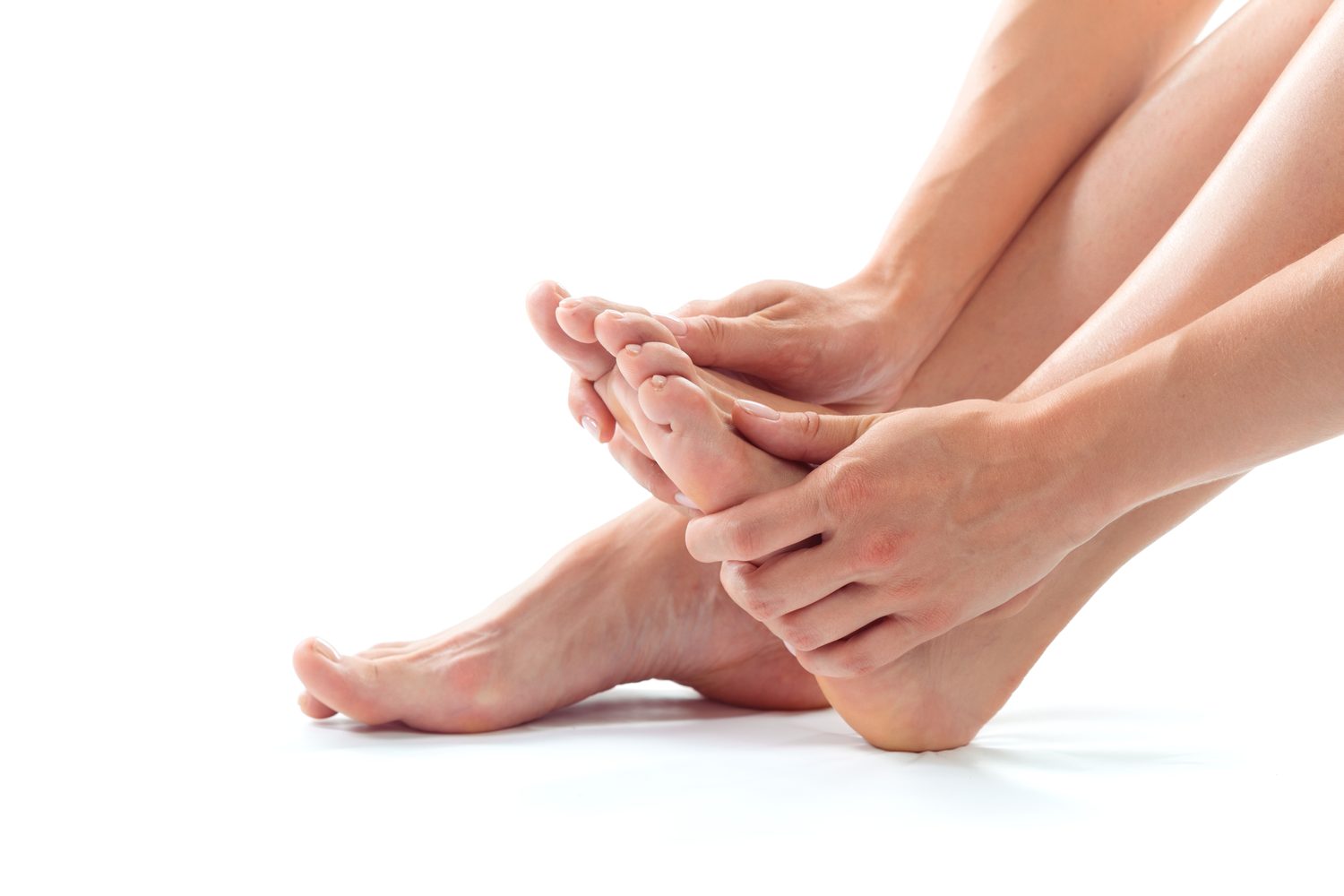
In the evening, it is suitable to massage the feet – either manually or with the help of a pearl bath. Later, once the acute inflammatory phase has passed, you can also add warm compresses that pleasantly warm the muscles and relieve tension.
Bc. Edita Prošková – studied physiotherapy, during her studies, she focused on podiatry. In her private practice in Roudnice nad Labem, she deals with both acquired and congenital foot defects in adults and children.
Homeopathy is often effective
Patients suffering from heel spurs often respond well to homeopathy, specifically a medicine named Hekla lava 9 C, taken twice daily with 5 granules for 3-4 weeks. As the name suggests, it is a diluted volcanic ash from the Icelandic volcano Hekla. Sheep in the area, which accidentally consumed ash from the lava, began to develop painful bony outgrowths.
The principle of homeopathy is that like cures like, hence the significant improvement in the conditions of the sheep after administering the homeopathic remedy. Additionally, patients report that the symptoms associated with heel spurs usually disappear within just two weeks. If problems persist, contact your homeopath.
Prevention can be found in barefoot shoes
Please be aware that barefoot shoes are certainly not suitable for acute pain associated with heel spurs. They serve rather as prevention, so it is advisable to switch to them only once the spur has been treated.
Barefoot walking has the advantage of evenly distributing the load across the foot and the entire leg, thus preventing one-sided strain. It lacks a thick sole, heel, or lining that serves as arch support. Instead, the sole of barefoot shoes is thin (up to 6 mm), has a so-called zero drop (i.e., the difference between the heel and the toe), and does not provide any support for the foot arch.
Belief in better tomorrows
While heel spurs can indeed be quite troublesome, it is certainly not unrealistic to get rid of them. The timeliness of therapy and your diligence in performing home exercises are crucial, but if you arm yourself with patience, the results will not take long to manifest.
 Czech barefoot brand
 Return within 14 days
 € - EN
 Čeština
 Deutsch (DE)
 Deutsch (AT)
 Slovenčina
 Magyar
 български
 Nederlands
 Français
 Hrvatski
 Italiano
 Italiano
 Polski
 Română
 Slovenščina


